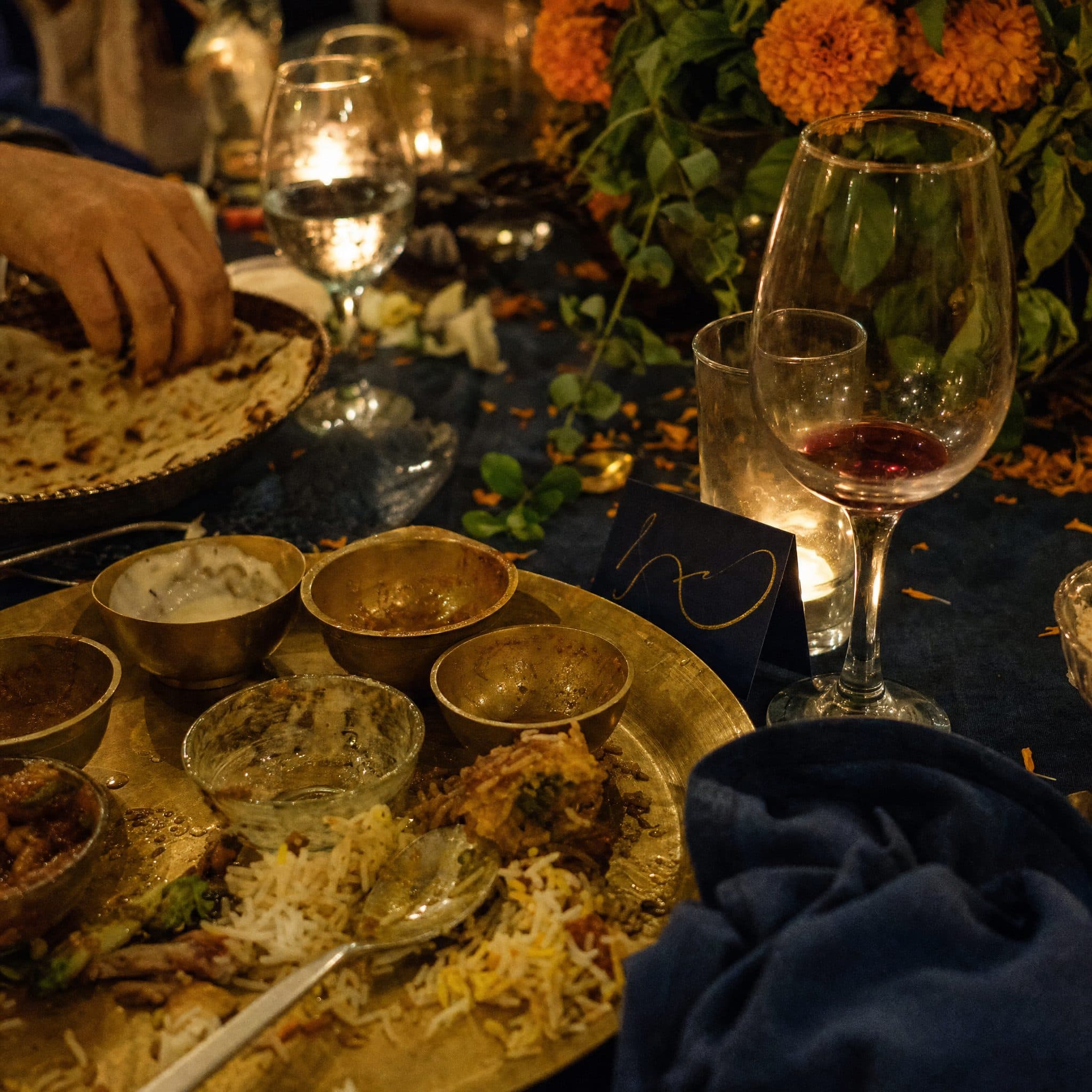
Indian chefs and catering teams are flown into Marrakech for the week, and Jain, Swaminarayan and pure vegetarian menus are cooked in separate kitchens with their own equipment where a family requires it. The constraint is almost never the menu. It is how many covers the kitchen can put out at once.
The kitchen is the constraint, not the courtyard
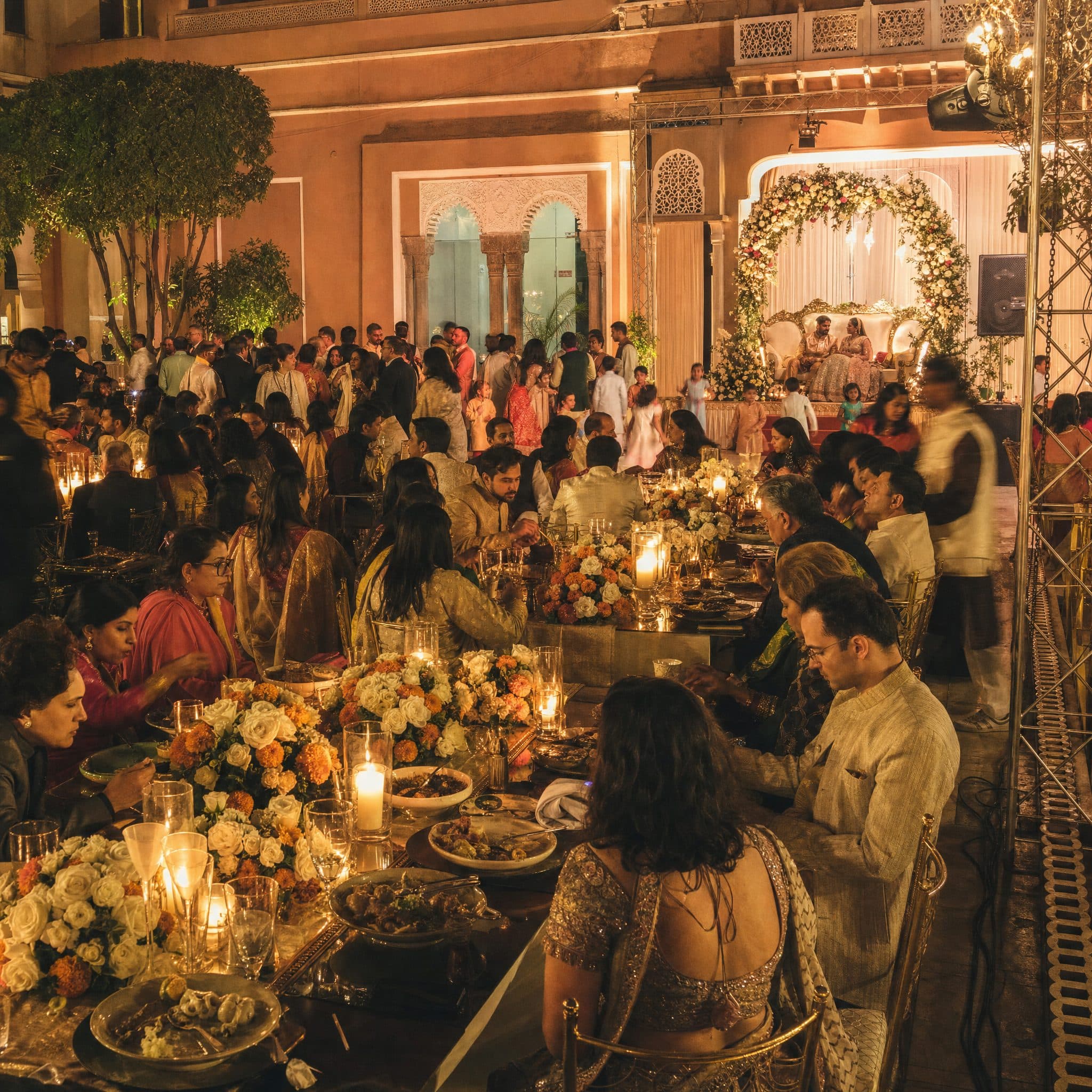
A palace courtyard that seats eight hundred may have a kitchen built to serve two hundred. Ask a venue how many covers it has actually served at one sitting, and on what date, rather than how many it can seat.
Above roughly four hundred, temporary kitchen units and additional power come in. That decides where the catering tent stands, where the generators sit, how far a plate travels before it reaches a table, and whether dinner for eight hundred arrives hot.
Pure vegetarian, Swaminarayan and Jain
Three different requirements, and they are not interchangeable. A caterer given one vegetarian number for the week will cook one vegetarian menu, and two of the three families at that table will not eat it.
The answer to all three is separation rather than substitution: a kitchen of its own, its own pans, boards and oil, and cooks who are not moving between it and the main line. A Moroccan kitchen is meat heavy by default, and cross contamination is the real risk, not intent.
Give the caterer counts, per event, early. Sixty Jain covers at the Mehndi and four hundred pure vegetarian at the reception is a plan. A note in month seven saying some of the family is Jain is not.
| Menu | Excludes | And also |
|---|---|---|
| Pure vegetarian | Meat, fish, egg | Nothing further. Dairy is eaten |
| Swaminarayan | Meat, fish, egg | Onion and garlic |
| Jain | Meat, fish, egg, onion, garlic | Root vegetables, so no potato, carrot or ginger. Some families do not eat after sunset, which moves the service time rather than the menu |
What travels, and what is bought here
Produce, dairy, rice and most fresh ingredients are bought in Marrakech, and the market here is good. What travels is what the chef will not compromise on: particular spice blends, specific flours and lentils, and mithai, which does not survive being improvised.
That split is agreed with the chef in writing before anything is booked, because it sets the freight, the customs paperwork, and how early the team has to arrive.
Four days without repeating yourself
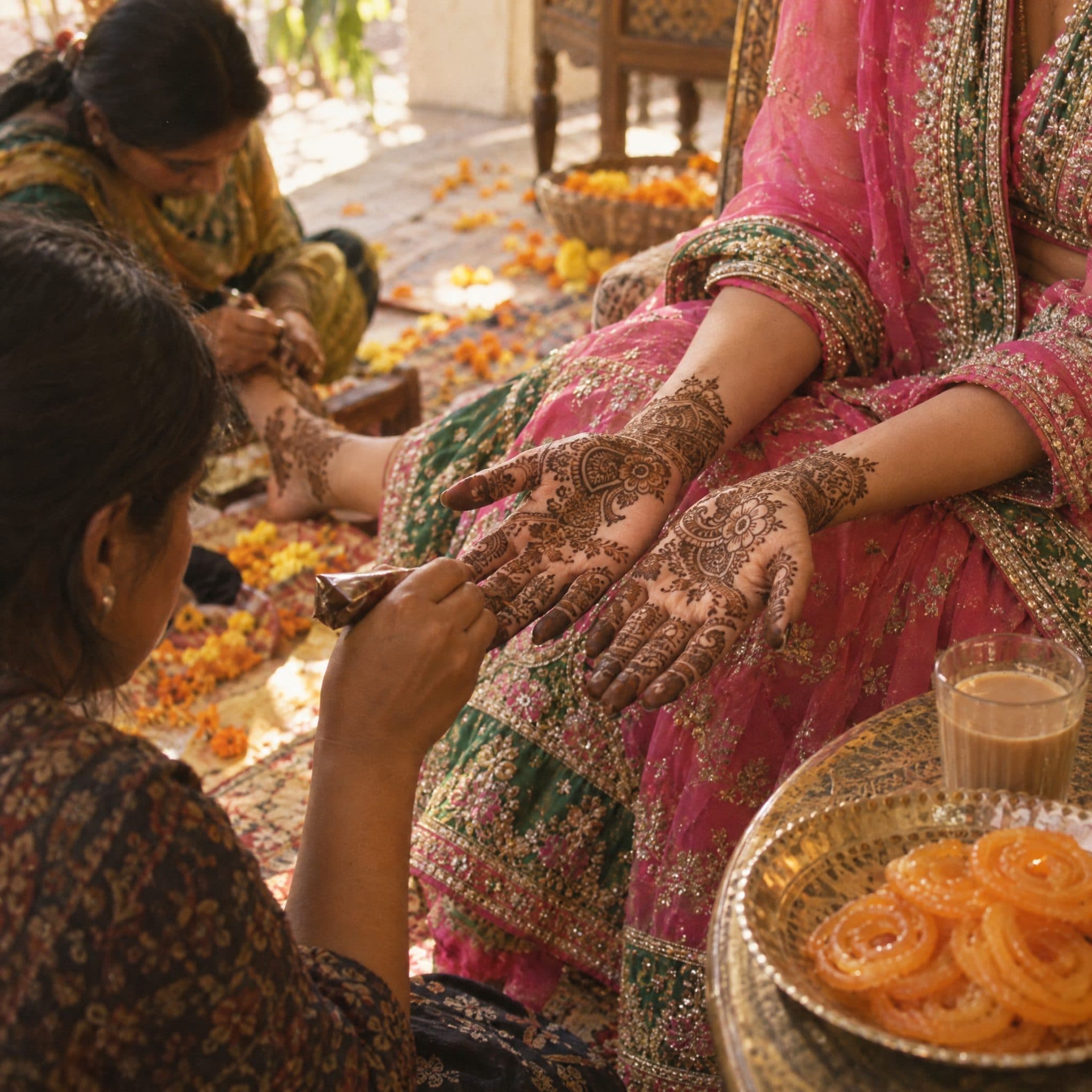
Guests notice repetition long before they notice ambition. The Haldi is breakfast in a garden. The Mehndi wants chaat and live counters because nobody is sitting down. The Sangeet is fed before the performances, never during them. The reception is the formal one, and it is the only one that is.
Then there are the meals nobody counts: breakfast every morning for everyone staying on site, lunch for the families on build days, and food for the crew, the musicians and the drivers, four days running.
| Event | When | How it is served |
|---|---|---|
| Haldi | Morning, nine to eleven, for the heat | Breakfast in a garden, guests seated on the ground |
| Mehndi | Afternoon into evening | Chaat and live counters. Nobody sits down, and a plated lunch here goes cold |
| Sangeet | Evening, before the performances | Stations, fed early. Never during the routines |
| Pheras or Anand Karaj | Set by the muhurat, so morning, evening or the middle of the night | Tea and light food around the ceremony, at whatever hour it falls |
| Reception | Evening, the formal one | Stations for the main, plated for dessert, everyone fed inside ninety minutes |
| Every morning | Breakfast, all four days | For everyone staying on site, and for the crew, musicians and drivers nobody counted |
Alcohol
Alcohol is legal in Morocco and served at licensed venues and hotels. Whether your venue holds a licence, and what it allows and until when, is settled in writing before contracts are signed rather than discovered in the final month.
Where there is an Anand Karaj, no alcohol and no meat go into the room holding the Guru Granth Sahib for the duration. That is a floor plan decision as much as a catering one, and it is an easy one to make at the drawing stage and an awkward one to make on the day.
Service, and the ninety minutes that matter
Plated service for eight hundred needs roughly one server for every ten guests. Stations need fewer staff and more floor, and they keep the room moving, which is what most Indian receptions want anyway. Most families here land on stations for the main and plated for dessert, and get everyone fed inside ninety minutes.
Around fifteen percent of a confirmed guest list moves in the final fortnight. Counts and menus have to absorb that without being redrawn.