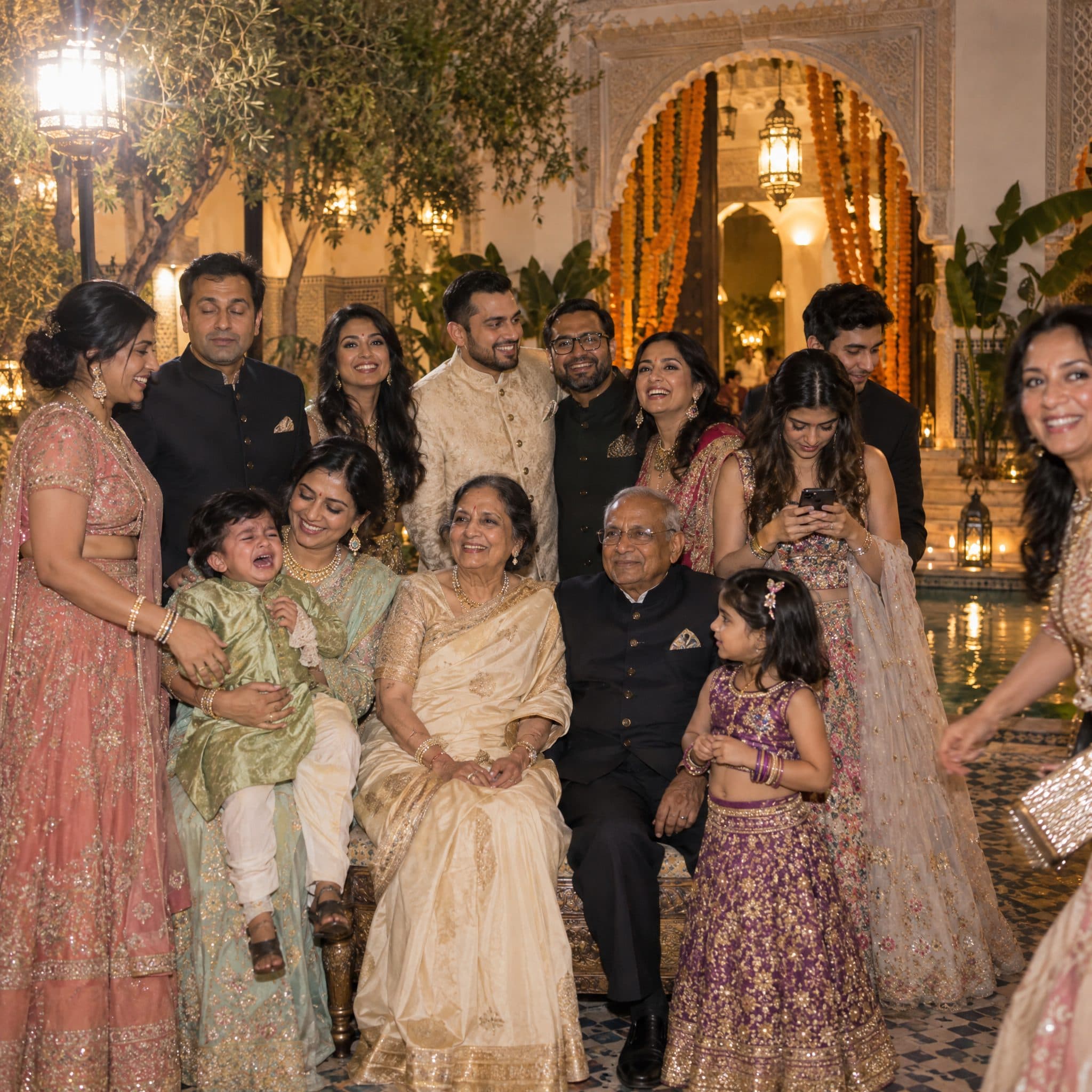
An Indian wedding travels in three generations. That is the point of it, and it means a four day outdoor programme in a hot country is being asked of people in their eighties and of children under five at the same time. Almost every problem in that sentence is solved by shade, distance and timing, and all three are decided at the venue stage rather than in the final month.
Heat is the whole thing
From April a Marrakech afternoon sits above thirty five degrees and a courtyard with no shade is unusable by one o'clock. Younger guests complain. Older guests do not, which is precisely the problem, and by the time somebody notices a grandmother has been in the sun for an hour it has already gone too far.
Shade at every daytime event, seating in it rather than at the edge of it, and water carried to people rather than waiting at a bar across a courtyard. One person on each day whose actual job is to watch the older guests, and who knows where the nearest cool room is.
Floor seating, and the Haldi problem
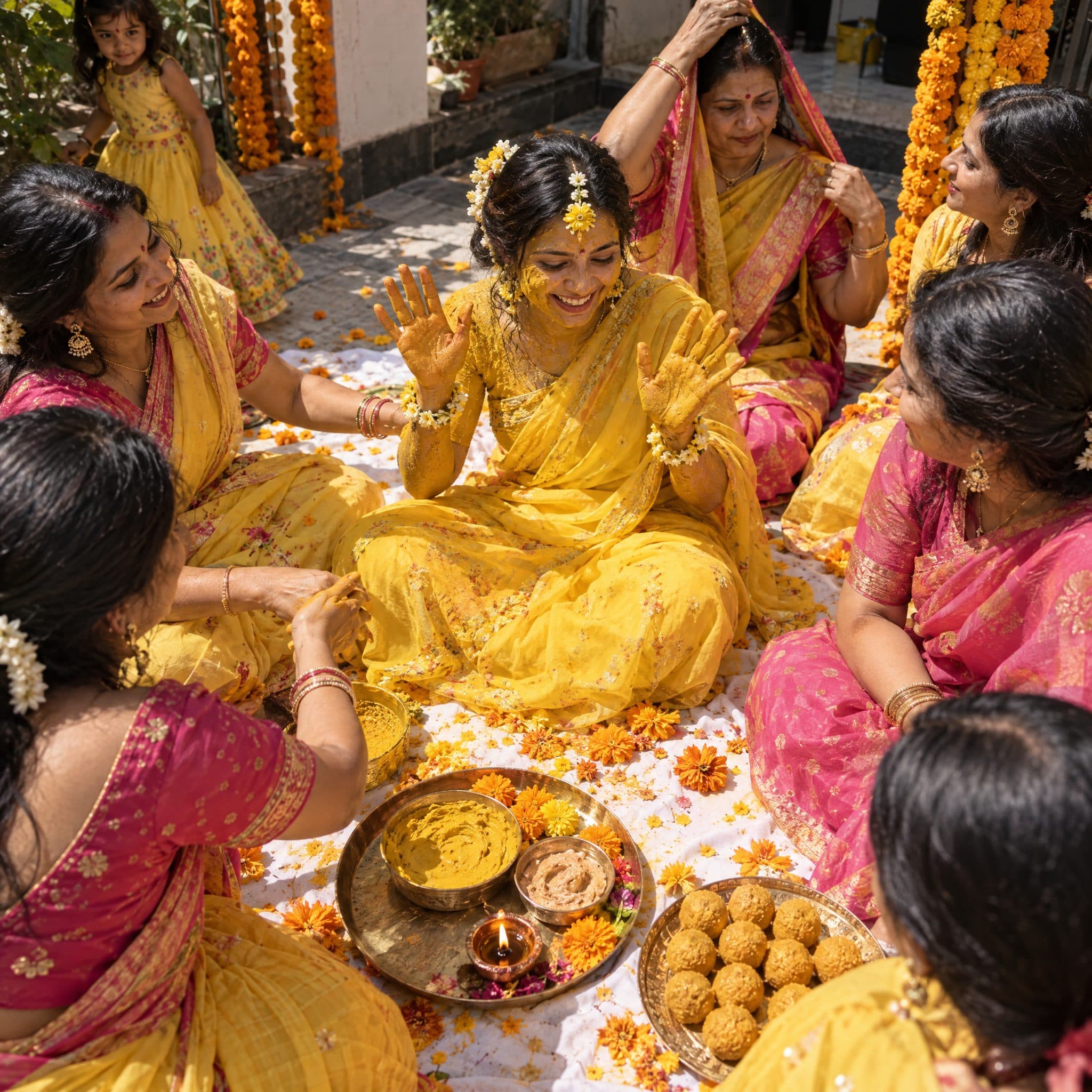
A Haldi is traditionally sat on the ground, and a large proportion of your older guests cannot get down to a floor or back up from one without help, in front of everybody, which most would rather skip the event than do.
Low chairs and benches at the edge of the same space, at the same level of participation, solves it completely and nobody has to ask. The same applies to the Pheras, where the ceremony runs an hour or more and the front row is often on the floor.
The venue questions nobody asks
Gravel, and how much of it. Beautiful in photographs, and impassable in a wheelchair or with a stick. Ask for the route from the car to the seat and walk it yourself.
Steps without handrails, which is most of a Marrakech palace. Lift access that stops one floor short, which is most of a converted riad. Bathrooms reachable without crossing a courtyard in the dark.
And the distance from the drop off point to where people actually sit, which on a large estate can be three hundred metres of uneven ground.
Forty children, four days
Children come to Indian weddings and they should. What breaks is the middle of the day: a two hour ceremony, a three hour lunch, and nowhere for a five year old to be a five year old.
A supervised room with air conditioning, somewhere near but not inside the event, staffed by people who are actually childcare rather than a waiter who has been volunteered. Food they will eat, served earlier than the adults. And an honest line in the guest pack about which events suit children and which run until two in the morning.
Pool safety is the one that gets overlooked entirely. Riads and palaces here have unfenced pools and courtyards full of water features, and during a wedding every adult in the building assumes another adult is watching.
Medical, briefly
Know where the nearest hospital is and how long it takes from the venue, not from the hotel. Have somebody who can say that in French at two in the morning.
Ask families to carry their own prescriptions in hand luggage with a list of what they are, because pharmacies here are good and cannot dispense against a name they do not recognise.