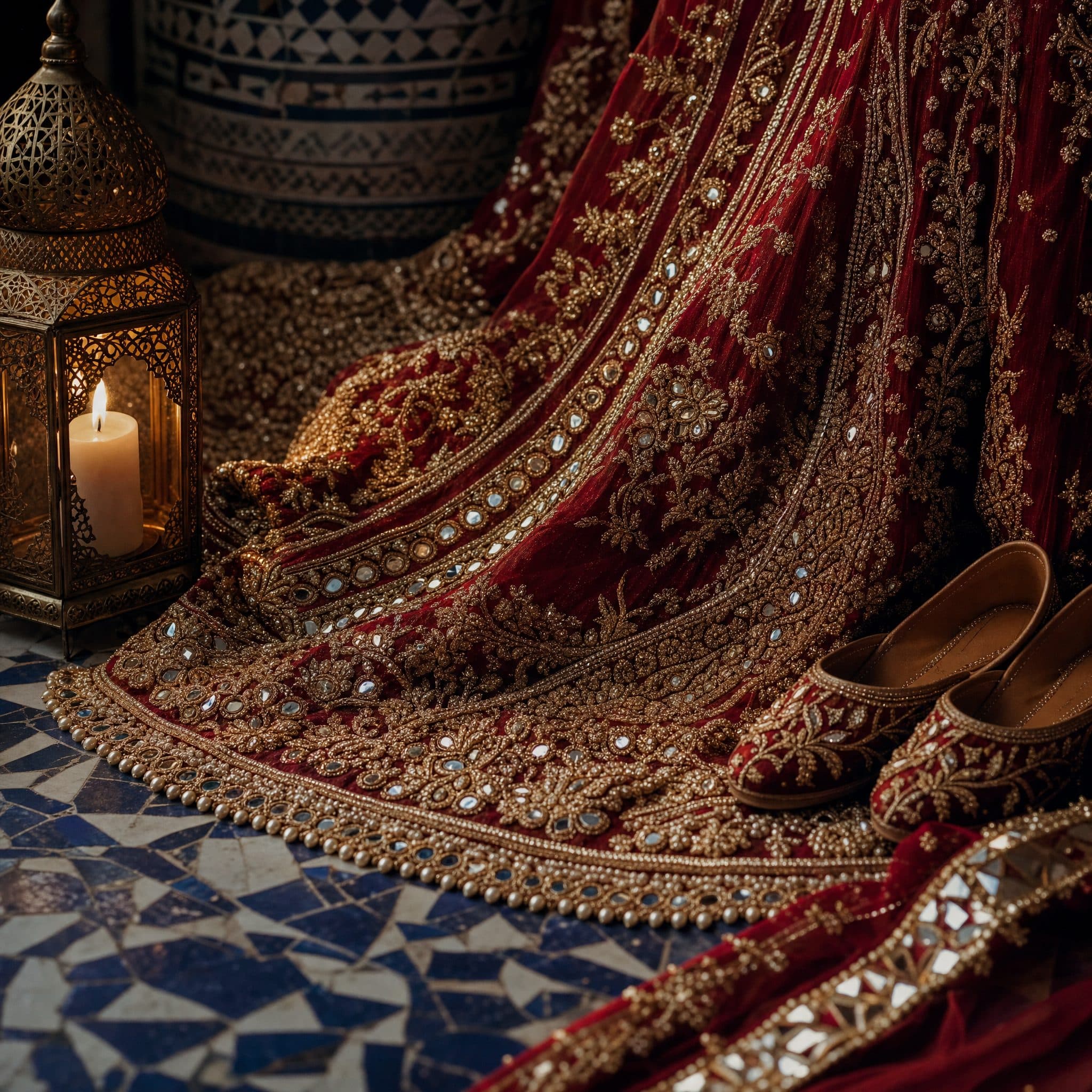
Bridal hair and makeup almost always travels with the family, because a bride wants the artist who knows her face and her mother's. What is arranged here is everything around that: enough artists for the family, a room with real light, start times worked backwards from the muhurat, and somewhere safe for a lehenga that is worth more than the flights.
The bride is not the problem. The other eleven people are
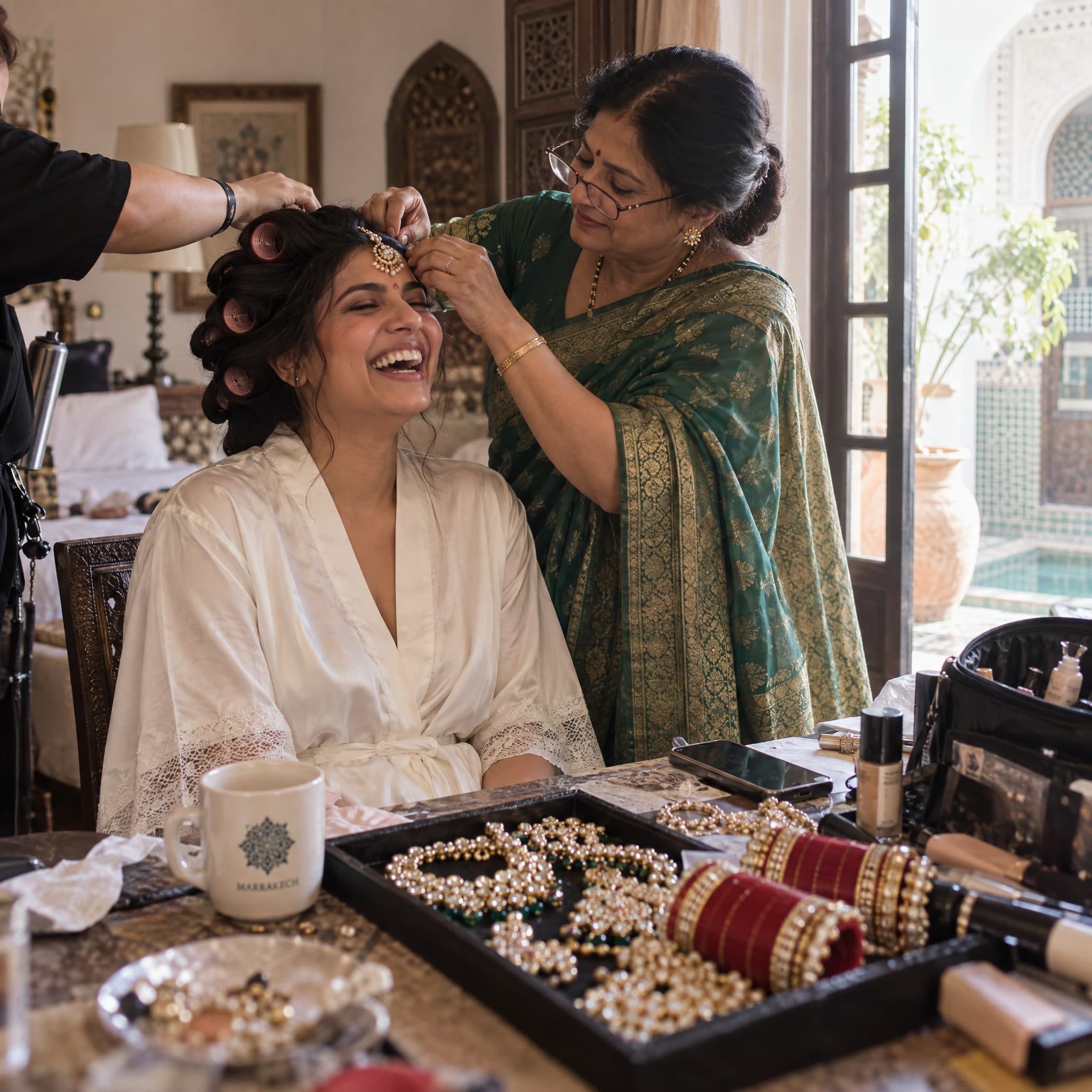
One artist can do a bride. A bride, her mother, two sisters, four cousins and three aunts on the morning of the ceremony is five hours of work, and it happens while the same room is also holding a photographer, a jeweller and somebody's toddler.
The working ratio is one artist for every three to four people getting ready, with the bride's own artist doing nothing else. Below that the morning runs late, and a late morning on the ceremony day collides with a fixed muhurat.
| Working back from | Time before | Why |
|---|---|---|
| Muhurat | 0:00 | This does not move. Everything else does |
| Bride dressed and jewellery on | 1:00 | Lehenga, dupatta pinning and heavy jewellery take longer than anyone allows |
| Bridal portraits in the room | 1:30 | The quiet ones, before the family comes in. Protect this half hour |
| Bride's makeup finished | 2:30 | Two hours for the bride, uninterrupted |
| Family finished | 3:00 | So nobody is still being done while the bride is being photographed |
| Everyone starts | 5:00 to 6:00 | Which on a midday muhurat means a six in the morning start, and that has to be said out loud early |
The room matters more than anyone thinks
North facing if possible, with a window and no overhead colour cast. Marrakech interiors are beautiful and often dim, lit warm and low, which is lovely for dinner and wrong for makeup that has to read on camera at six in the evening.
It also needs plug sockets in useful places, a mirror that more than one person can use, and a door. A suite is better than a hotel room and a hotel room is better than a corner of the bridal suite with eleven people in it.
Power: bring adaptors for everything and expect the hotel to have two. Indian and UK appliances both need them here, and a styling tool that will not plug in at seven in the morning is a genuine crisis.
Heat, and what it does to a face
An outdoor ceremony in May at thirty five degrees is a long time in full bridal makeup. Artists who work in India know this; artists who normally work in the UK sometimes do not, and it is worth saying to them directly before they pack.
Plan a touch up between the ceremony and the reception, with somewhere private to do it. And if the Haldi is in the morning, nobody wears anything they mind losing, including the artists.
The lehenga
It flies in hand luggage or it does not fly. Airlines lose bags on every route in the world and this is the one bag that cannot be replaced. Say it to every travelling member of the wedding party, in writing, twice.
On arrival it needs hanging immediately, steaming rather than pressing, and storage somewhere dark and dry. Marrakech is dry, which helps. Repairs, a steamer and a tailor at short notice are arranged locally and are worth having on standby for the whole week, because something always goes, usually a hook, usually an hour before.
Jewellery goes in the hotel safe, and the safe is photographed being closed. This is not paranoia, it is what a family thanks you for on day four.