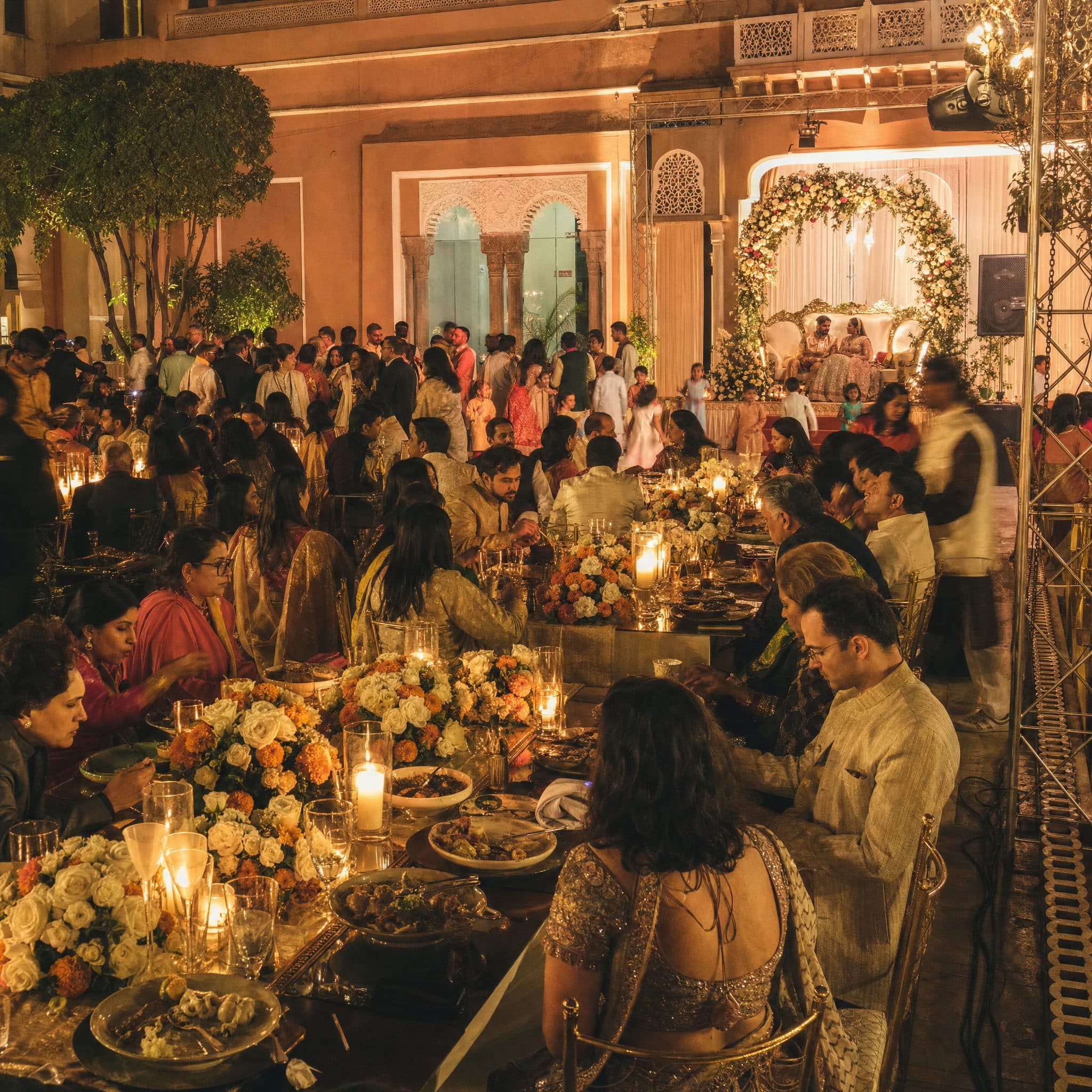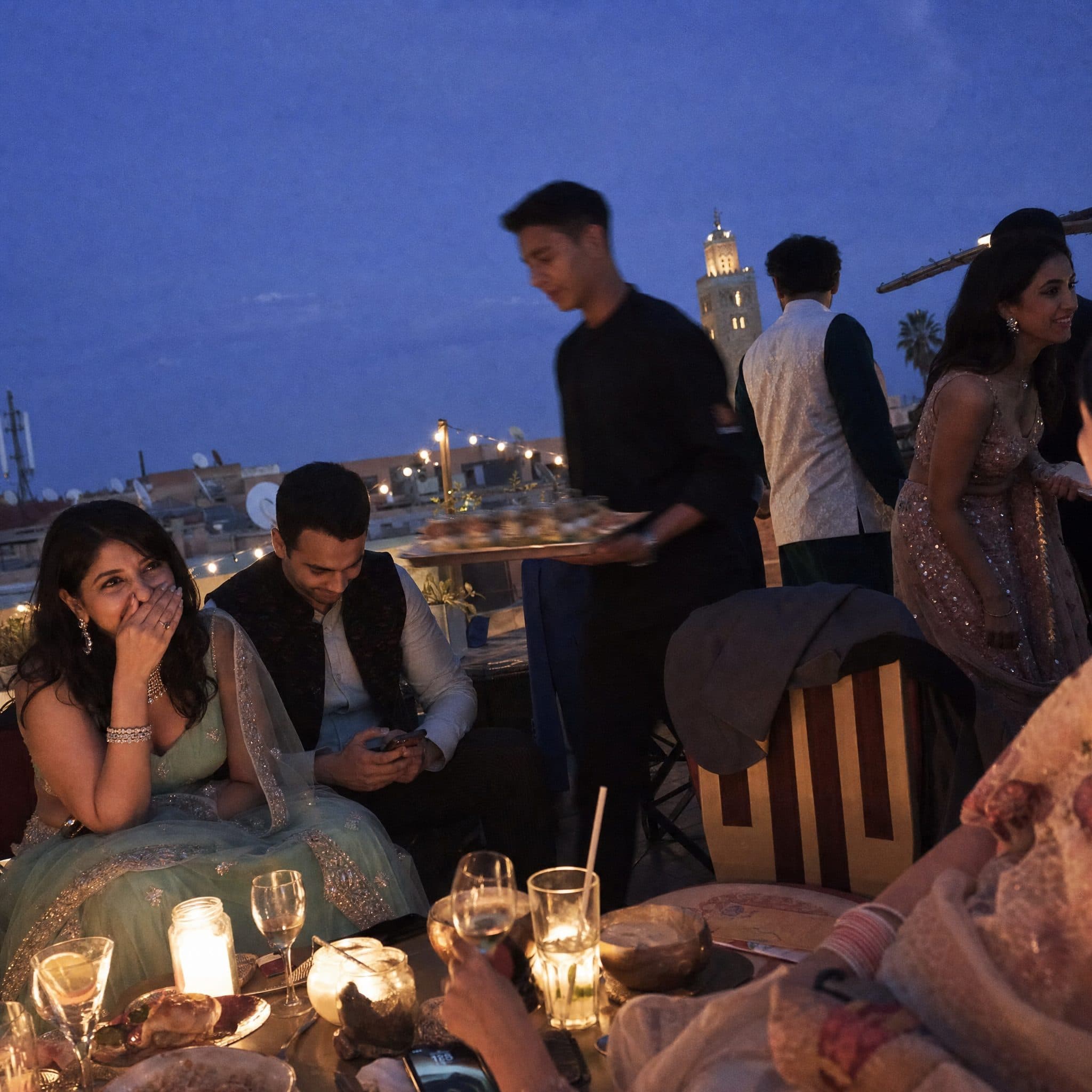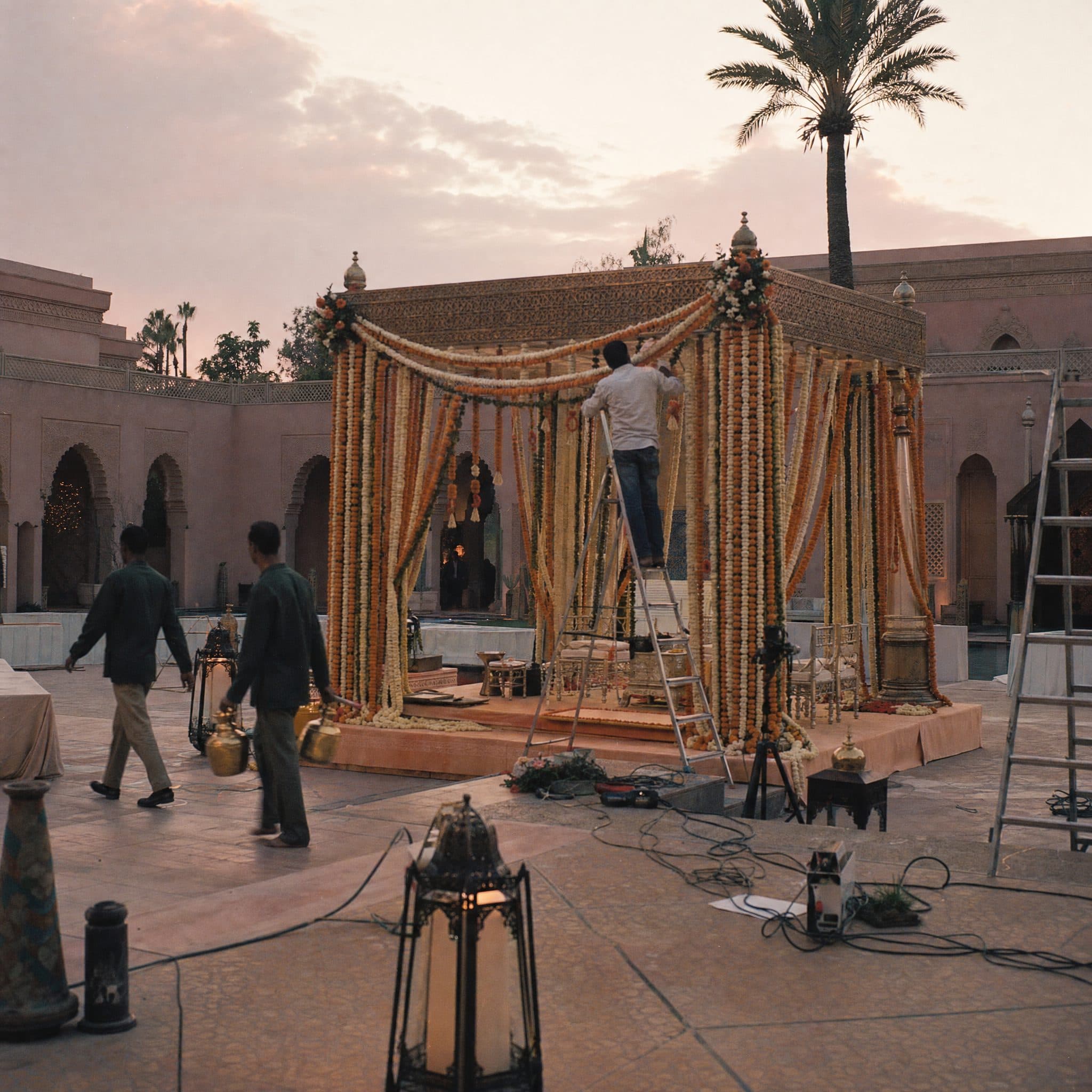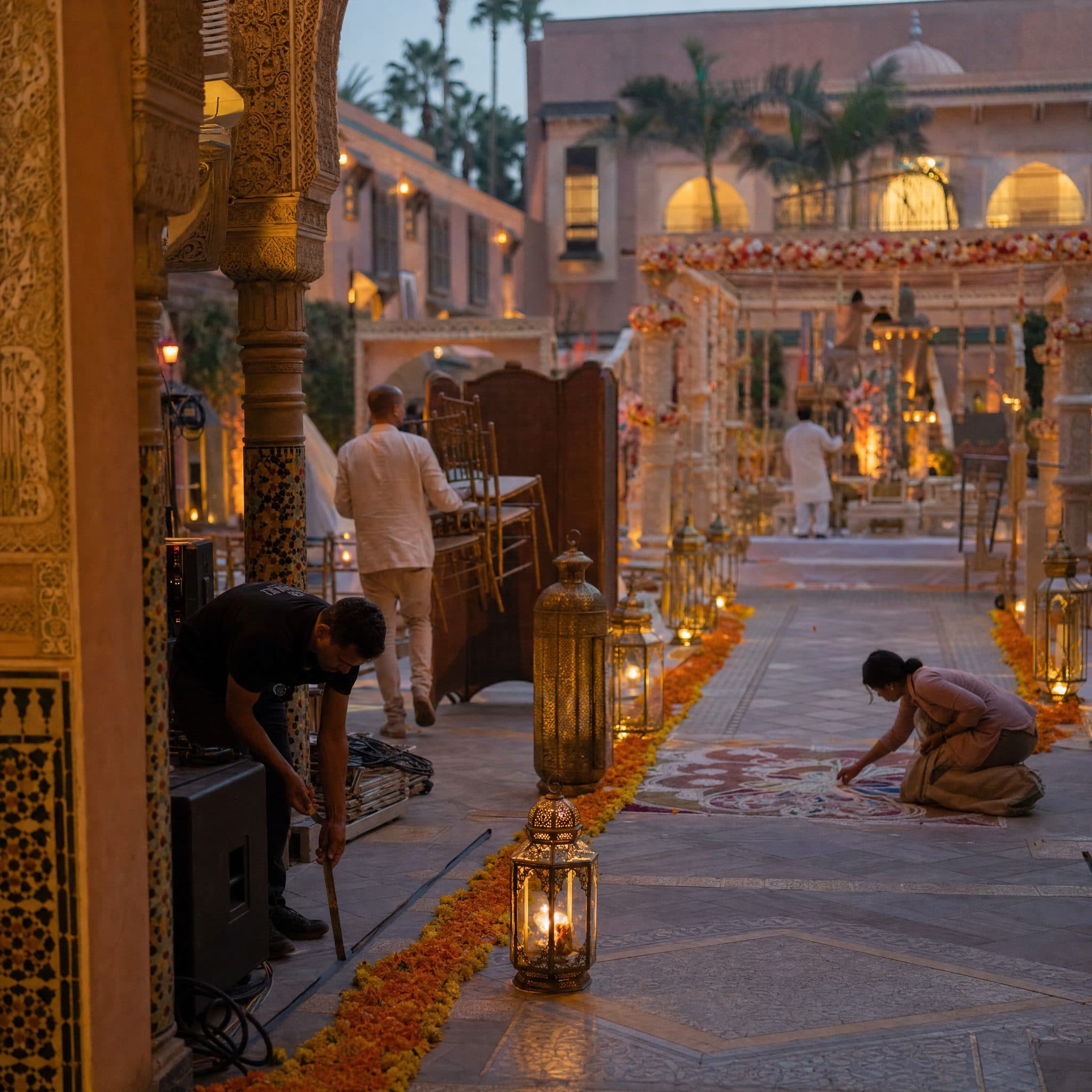
An Indian wedding in Marrakech needs a palace or a private estate, not a hotel ballroom and not a riad. The requirement is not beauty, which is everywhere here. It is grounds that hold several hundred people, more than one usable space so a Mehndi can run while a Sangeet stage goes up, a kitchen that can feed everybody, and access to build a mandap overnight.
What a four day wedding asks of a property
Two or three separate spaces, not one large one. The week runs several events a day in different settings, and a venue with a single courtyard turns your programme into a series of resets while four hundred people wait somewhere else.
Vehicle access to the gate for a Baraat, and a route the horse can actually take. Build access overnight, because a mandap goes up after the Sangeet comes down. Power that can carry a kitchen, a stage and lighting at once, which on most properties here means a generator.
Somewhere the families get ready that is not a hotel twenty minutes away. On the morning of the ceremony, a bride, her mother, her sisters, the artists and the photographer all need one room with good light and a door that closes.
What each guest count actually needs
The number that matters is not what a venue can seat. It is what it has served.
| Guests | What the property needs | Where it usually fails |
|---|---|---|
| 150 to 250 | One good courtyard, a second space for the Mehndi, rooms on site for the immediate family | Rarely fails on space. Fails on getting ready rooms and on parking |
| 250 to 450 | Two or three spaces, a kitchen that has served this number, a proper service corridor between kitchen and tables | The kitchen. A courtyard built for two hundred covers does not stretch by a third |
| 450 to 800 | Grounds rather than a building, temporary kitchens, generators, and a build crew working overnight between events | Everything at once: power, covers, back of house, and the distance a plate travels |
The six questions that separate a yes from a maybe
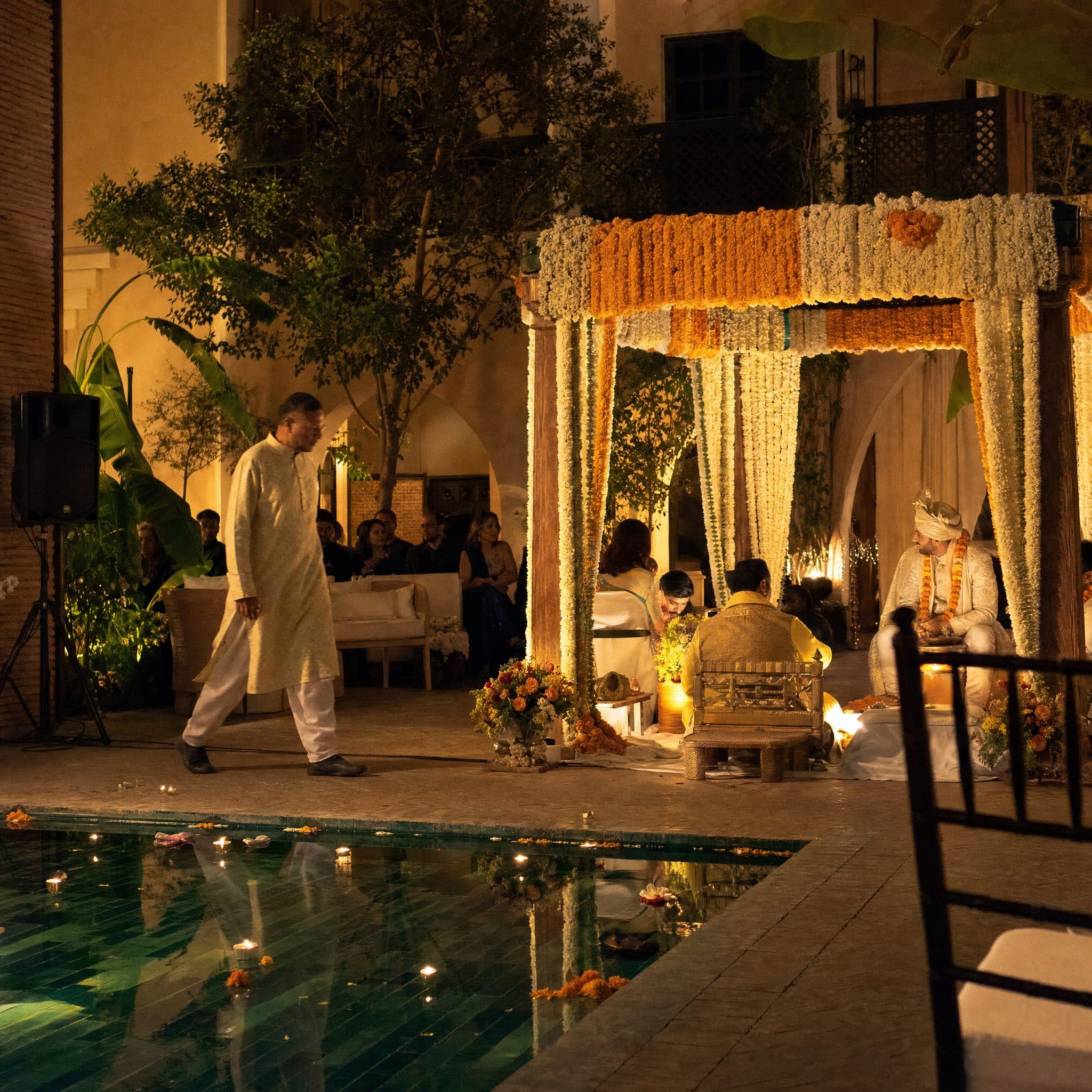
Can we light a sacred fire in the mandap, outdoors, and will you put that in the contract. Some venues here say yes immediately, some say yes and mean no, and the difference only appears in writing.
How many covers have you actually served at one sitting, and on what date. Not capacity. A served number with a date attached.
What time does music have to stop, and is that a local rule or a house rule. A house rule can sometimes be extended with a late licence. A municipal curfew cannot.
Can we have the site overnight to build. A venue that closes at midnight cannot give you a mandap by morning.
Are we the only wedding on the property that week. On a four day programme with a build, shared use is not a discount, it is a fault line.
Will you hold the date against a muhurat that has not been set yet. Families often have a window before they have a date, and a venue that cannot hold a window is a venue that will lose you the date.
Exclusive use is not a luxury here
A European wedding is one afternoon and one evening. Yours is four days, six events, two builds and three hundred people moving between them, and a property hosting anyone else in that window will ask you to clear spaces on their schedule rather than on yours.
Exclusive use also solves the thing nobody puts in a brief: where your family can be loud at two in the morning without a stranger complaining.
What we do before you sign
We visit with the programme in hand rather than the brochure. Every space is walked against the event it would hold, at the hour it would hold it, because a courtyard that is perfect at noon is unusable at four in July.
Then the answers above go into the contract rather than into an email. Fire, curfew, build access, exclusivity and covers. A venue that will write them down is a venue that has done this.