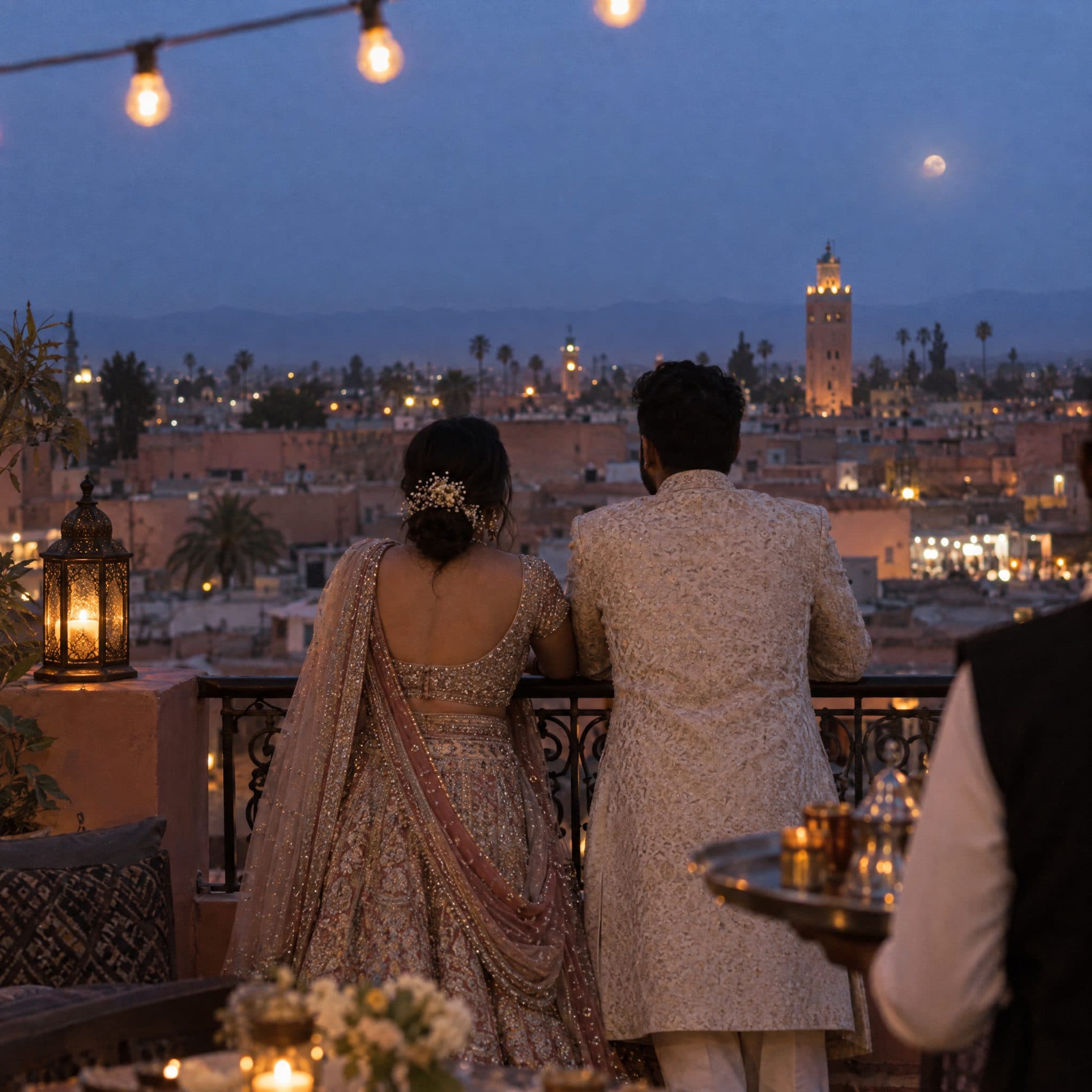
March to May and September to November. Those are the two windows, and almost every Indian wedding here happens inside one of them. The reason is simple: a four day outdoor programme needs afternoons you can sit through and evenings you can dance in.
March to May
The best of it. March is mild and can still rain. April and May are warm days and cool evenings, which is the combination you want when guests are in heavy lehengas and sherwanis for six hours.
It is also the busiest and most expensive window. Venues know exactly what they have.
June to August
July and August regularly pass 40°C. A Haldi at ten in the morning is survivable. A four day programme with older guests is not, and no amount of misting fans fixes it.
June is borderline. Early June works if the daytime events are kept short and shaded. Late June is a gamble.
The saving is real, sometimes thirty percent, and we still talk most families out of it.
September to November
The other good window, and increasingly the more popular one. September is still hot in the first half. October is close to perfect. November is mild with a rising chance of rain and shorter evenings.
For families coming from the UK and Europe this window has a practical advantage: it avoids the Indian monsoon and sits between the school holidays.
December to February
Cold at night. Marrakech drops to single figures in December and January after dark, and outdoor evening events need heating, which means gas heaters in every photograph.
Days are pleasant and clear. If your programme is mostly daytime, or mostly indoors, winter is cheap and quiet and the light is beautiful.
Month by month, in numbers
Averages rather than promises, and the figure that matters for a four day outdoor programme is not the daytime high. It is the gap between the afternoon and the evening, because your guests are dressed for one of them and sitting outside in both.
| Month | Daytime | After dark | For a wedding |
|---|---|---|---|
| January | High teens | Single figures | Bright days, cold nights. Indoors or heated, and cheap |
| February | High teens to twenty | Single figures | The same, with a little more daylight |
| March | Low twenties | Around ten | The window opens. Can still rain |
| April | Mid twenties | Low teens | Close to ideal. Warm days, cool evenings, heavy outfits bearable |
| May | Around thirty | Mid teens | Excellent, with the afternoons already needing shade |
| June | Mid thirties | High teens | Borderline. Early June works if daytime events are short and shaded |
| July and August | Regularly past forty | Low twenties | No. Around thirty percent cheaper, and we talk families out of it |
| September | Mid thirties falling | High teens | Hot in the first half, very good in the second |
| October | Around thirty | Mid teens | The best month of the year here |
| November | Low twenties | Low teens | Mild, shorter evenings, a rising chance of rain |
| December | High teens | Single figures | Cold after dark, clear light, quiet and inexpensive |
Booking against the season
The two good windows are also the two busy ones, and the best properties go around eighteen months out for a date in April, May or October. A family that settles a muhurat twelve months ahead for peak season is choosing from what is left rather than from what exists.
Where the muhurat allows any flexibility at all, ask about the shoulder weeks. Late March, early June and late November are materially easier to book, noticeably cheaper, and only a little less perfect than the weeks either side of them.