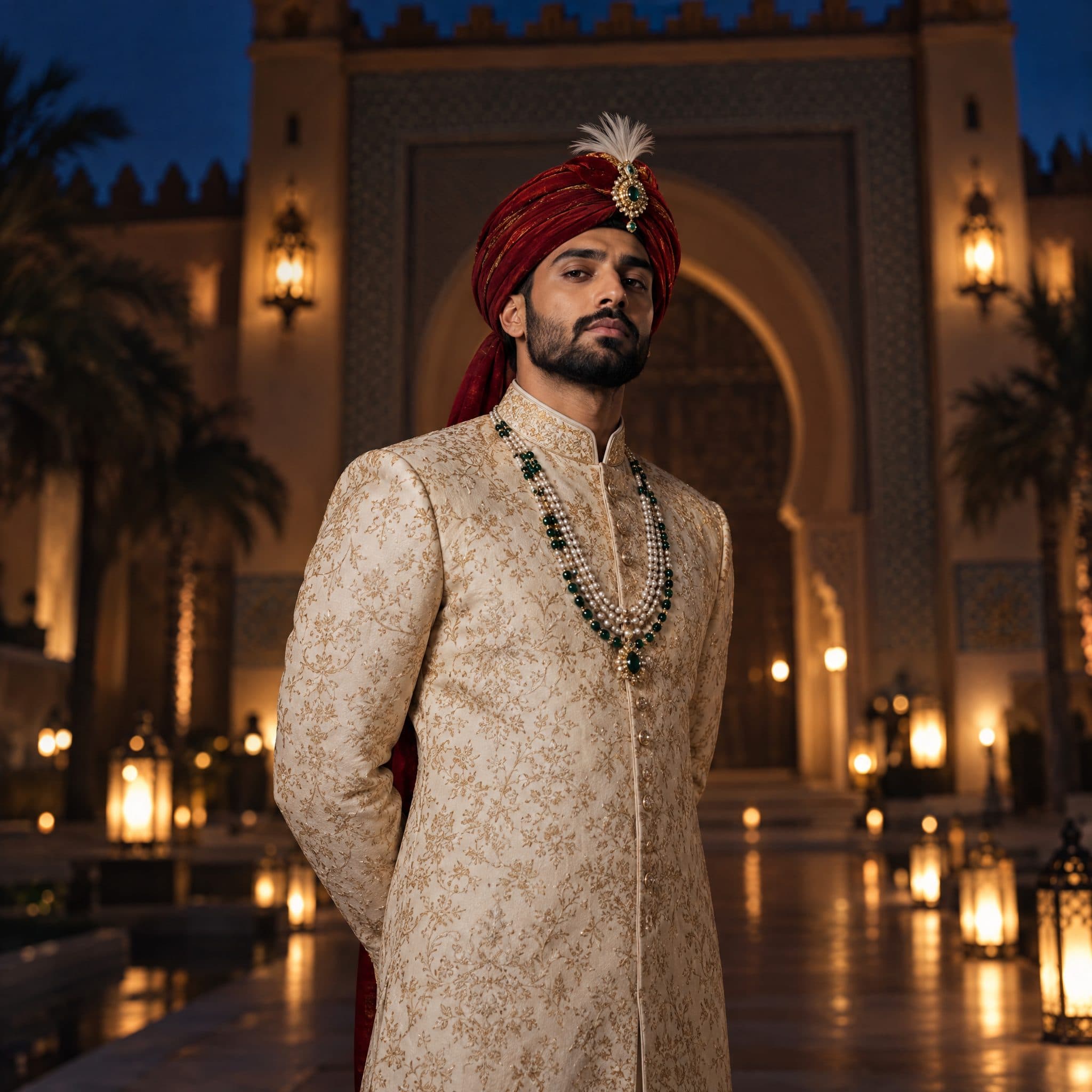
The Milni is the moment the two families meet: elders matched in pairs, garlanded, embraced, photographed. It happens wherever the Baraat comes to a halt, which means it is decided by the gate rather than by the schedule, and the gate is chosen months before anyone thinks about the Milni at all.
It is a floor plan decision, not a timing one
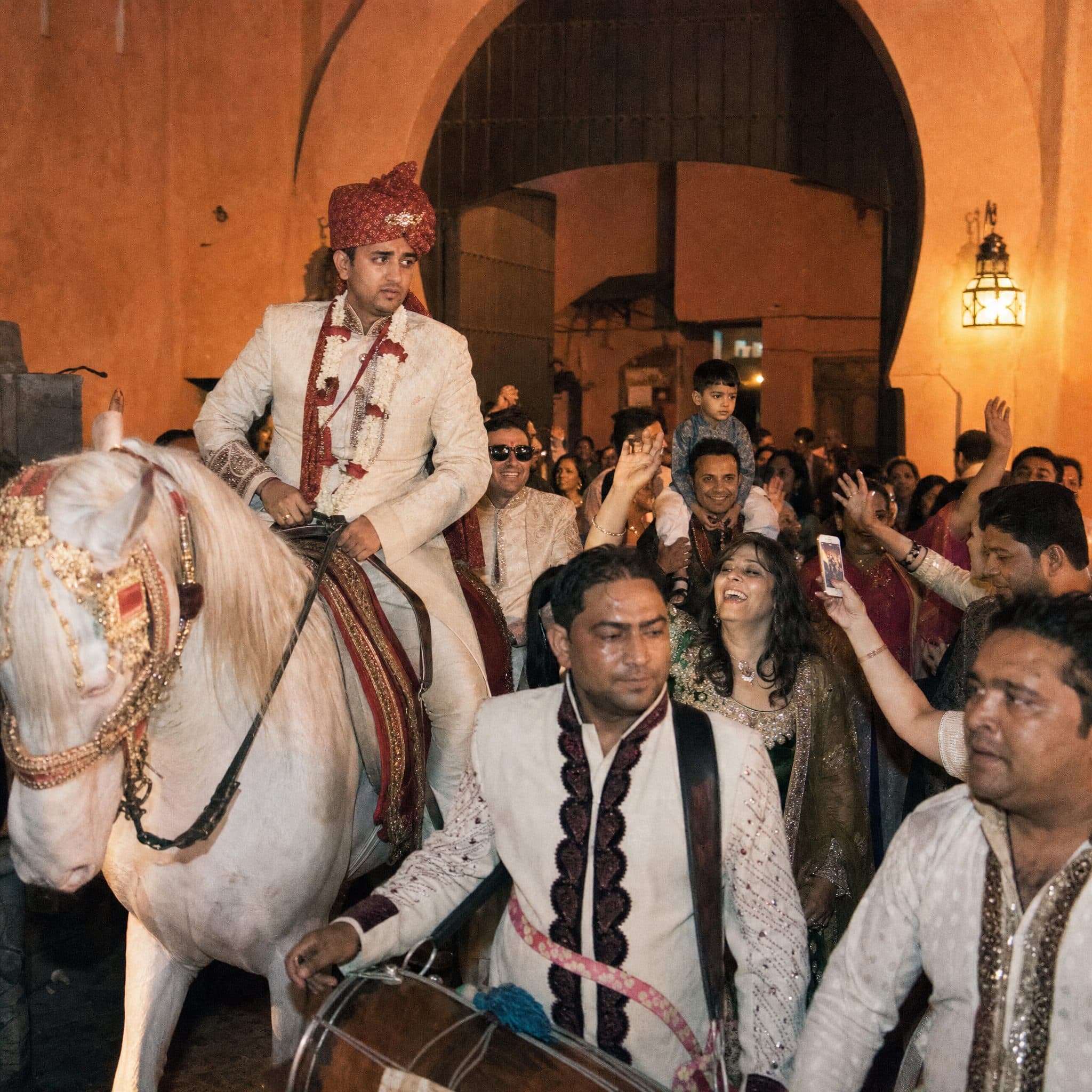
The Baraat arrives, the dhol stops, and everybody is suddenly standing still in a space that was designed for people to walk through. Palace gates in Marrakech are handsome and often narrow, and a hundred and fifty people who have just danced up to one do not fit beside it.
What the Milni needs is a flat, shaded area immediately inside or beside the arrival point, wide enough for two rows of family to face each other with photographers behind both, and clear of the route everyone then has to walk down. Pick it on the site visit, standing at the gate, not from a plan.
How the time actually goes
It always runs longer than the schedule says, and the overrun is at the front rather than the back.
| Stage | Planned | What happens |
|---|---|---|
| Baraat assembles | 20 minutes | Thirty minutes. Nobody is where they said they would be, and the horse arrives early |
| Procession | 15 minutes | Twenty five or more. It is a dance, and it covers about a hundred metres |
| Arrival and the halt | 5 minutes | Ten. The dhol has to be stopped, which takes longer than starting it |
| The Milni itself | 15 minutes | Twenty five to forty, depending on how many pairs and how many photographs |
| Moving everyone in | 10 minutes | Fifteen, and this is where a muhurat gets tight |
Garlands, and counting them properly
One per pair, plus spares, and the count comes from the families rather than from a florist's guess. Six pairs is common, twelve is not unusual, and the number is agreed between the two sides weeks earlier because it is also the order of precedence.
Have them made here. Marigold and rose are excellent and cheap in Marrakech, and garlands flown in arrive tired. Have them delivered the morning of, kept cool and out of sun, and held by one named person rather than left on a table.
The photograph nobody gets right
The Milni is the parents' moment, and it is the one sequence in the week where the couple are not the subject. Two photographers, one behind each family, and a brief that names the pairs in order so nobody is shooting a stranger's back.
Light matters here more than anywhere. An evening Baraat arriving at a lit gate is the shot. A three o'clock arrival into hard overhead sun is six families squinting, and moving the Baraat by ninety minutes fixes it entirely.